


What Is An Argyle Pattern?
Argyle is the diamond-and-line pattern you know from golf sweaters and dress socks: interlocking diamonds laid out in a grid, with thin diagonal lines, the overcheck, crossing through them. It comes from Scotland in the seventeenth or eighteenth century and takes its name from Clan Campbell's tartan in the Argyll region of the western Scottish Highlands. It went global through 1920s golf fashion, and it has stayed a familiar face in knitwear, hosiery, and decorative design ever since.

We will get into why it carries that name, how it differs from tartan, whether people still wear it, the history, how the colors work, where you see it, and what you need to make it.
What does an argyle pattern look like?
It shows large diamonds set in a grid across the surface, each one touching its neighbors corner to corner so the shapes form a continuous mesh. A dress sock gives you the whole system in a few inches of knit. Its diamonds are small, about three-quarters of an inch, and they're split among three or four colors, arranged so no diamond matches the ones beside it. Two thin diagonal lines in a contrasting tone cross each one. That's the overcheck, and it cuts every diamond into smaller triangles.
Without that color shuffle you'd just have a plain diamond grid. The overcheck earns its place as well, because it's where the movement comes from. It also lends argyle that faint tartan quality, so geometry that's fairly basic underneath ends up looking elaborate.
Now set an argyle sweater down beside the sock. Its diamonds run two to three inches across, and at that size the same argyle pattern comes off bold, nearly graphic, where the sock looked fine and refined. We'd take the small one. It's easier to live with.
Color tends to go on in layers. The first is pale, usually cream or white, with beige or a pale gray underneath once in a while. On top go one or two accents. Warm yellow is common. So is deep red. Navy gets plenty of use too, and forest green and burgundy have their turn. Then comes the overcheck, a dark line laid over all of it. Our What Is a Trellis Pattern guide covers related diamond-based designs.
What is the diamond pattern called?
A repeating diamond pattern is usually called argyle when the diamonds alternate in color and thin diagonal lines (the overcheck) cross through them, and harlequin when the diamonds are solid blocks of color with nothing laid over them. Check for the lines. No overcheck, no argyle.
Older trades had their own words for it. A herald calls a single diamond a lozenge, and a shield divided all over into them is lozengy. Weavers and stone carvers said diaper, meaning any allover repeat of small linked shapes, very often diamonds, the sort you find on old table linen and on the walls of Gothic churches. Then there's the trellis, where only the outlines are drawn, like laths in a garden, and something leafy usually climbs through.
Which one suits a wall? Harlequin in two quiet tones down a long hallway reads almost like a tiled floor stood on end. Argyle wants more color and more attention. We'd save it for a study or a powder room, somewhere small enough that four colors and a crossing line don't take over the house.
Why is the pattern called argyle?
It is named for Clan Campbell of Argyll, the noble family of the western Highlands. Argyll is the stretch of western Scotland between Glasgow and the Inner Hebrides, and for centuries the Campbells were the dominant family there. (You'll sometimes see the region spelled Argyle today.) Their cloth was a green-and-blue tartan, one of the oldest documented Scottish tartans.
The design goes back to that Campbell tartan, and to the patterned socks Highlanders had already been wearing for centuries. So there's a real line from clan cloth to knitwear. It bends, though. We'd call argyle a family resemblance rather than a copy, and we wouldn't push the connection any further than that.
Scottish knitters spent most of the eighteenth and nineteenth centuries turning woven tartan into a knitted category of its own. They kept the visual vocabulary and pared it down to diamond grids with the overcheck on top. By the late nineteenth century, that was the standard look in Scottish knitwear.
Its spread beyond Scotland belongs to the twentieth century. In the 1920s Pringle of Scotland began making argyle sweaters and socks, and American golfers like Bobby Jones were wearing argyle through that decade's tournaments. Off the course, Edward, Duke of Windsor, made the look fashionable in 1920s and 1930s dress.
What is the difference between tartan and argyle?
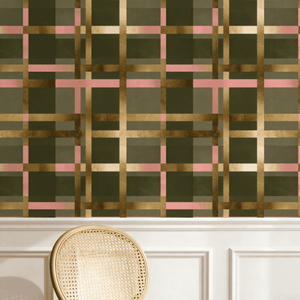
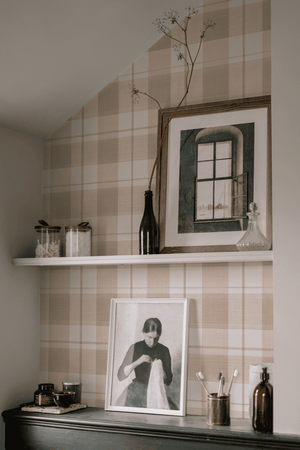
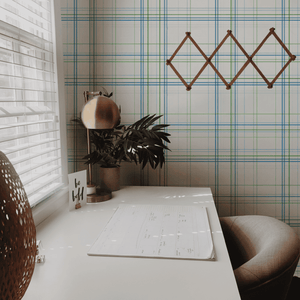
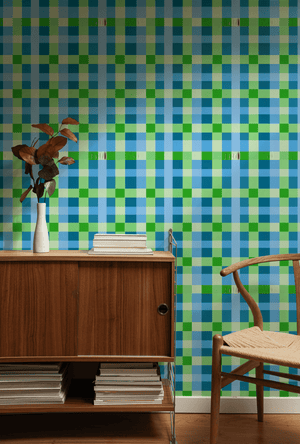
They are related but distinct. Tartan is a woven plaid, with horizontal and vertical color stripes crossing into a checked grid. Argyle is knitted, and instead of stripes it uses diamonds with diagonal overcheck lines laid across them. Both carry Scottish heritage. They're just built on different principles.
The bigger difference is what each one tells people. Tartan runs to thousands of named variations tied to specific clans and regions, each recorded in the Scottish Register of Tartans, so the exact stripe arrangement identifies a family. Someone who knows tartan can name Royal Stewart from the cloth alone. (Campbell of Argyll and MacDonald of Sleat are just as easy to spot.) Argyle has only a handful of standard color combinations and no clan attachment. It signals the broad Scottish tradition rather than any one family, which makes it the simpler one to wear. Nobody's going to ask whose colors you've got on.
How each one gets made differs too. A tartan comes off a loom, dyed warp crossing dyed weft, while an argyle sock or sweater is built up stitch by stitch as the knitter changes yarn colors.
Put either one on a wall and it becomes a print, so the choice comes down to the room. We'd give tartan to a country-house or Scottish-themed space. Argyle is happier in a golf clubhouse or a preppy American interior.

Do people still wear argyle sweaters and socks?
Yes, in steady but specific settings. Argyle has cycled through several popularity peaks since the 1920s and never quite disappears, though how current it looks depends on the year. Golf wear is its strongest home. Pringle of Scotland has produced it continuously, and so have Lyle and Scott and others. At certain traditional clubs it's close to mandatory.
Preppy American style leans on it too. Ralph Lauren, Brooks Brothers and J. Crew have all kept it going, and it's revived several times since 1980. Picture it over a button-down, with chinos and loafers. Dress socks are another constant. In business wear an argyle sock is a discreet bit of decoration, enough to add interest without fighting the rest of your outfit, and you can find it at every price point. Kids wear it as well. It turns up in British and American school uniforms, and in the dressy outfits that come out for formal occasions.
What is the history of the argyle pattern?
It emerged in Scotland in the seventeenth or eighteenth century, though the exact date is hazy because early Scottish knitwear was rarely written down. We'd be wary of any source that sounds more certain than that. What seems likely is that the argyle pattern grew gradually out of the Campbell tradition in the Argyll region.
Its first real job was kilt hose, the patterned socks worn with traditional dress. Scottish knitters were working it up for those by the late eighteenth century, when it had become a style of its own. The diamond-and-overcheck sat well on the curve of a leg, and it knitted up nicely in the local woolen yarn. Those early pairs were hand-knitted by Scottish craftswomen, for people close to home.
Then a company got involved. Pringle of Scotland took argyle industrial in the early twentieth century, fixing the standardized design you'd recognize now and producing it at scale, and its sweaters and socks became the international reference.
The first big moment abroad came in the 1920s. Bobby Jones wore argyle through his championship run, from 1923 to 1930. Edward, Duke of Windsor, meanwhile, carried the look into fashionable British and American menswear. Magazine coverage did the rest, spreading it as a recognizable style among well-dressed golfers.
How are colors used in argyle patterns?
Two broad palettes dominate. The traditional Scottish one is quiet and old-world. Natural cream wool sits under forest green and dark navy, with oxblood red and an ochre yellow in there as well.
The American collegiate version is louder and more saturated. Royal blue against white, for instance, or kelly green on navy, with red and yellow in the mix.
Beyond those two, contemporary makers use pretty much any palette at all. They can, because argyle's identity lives in the diamond-and-overcheck structure far more than in the specific colors.
Contrast is the one rule we'd call reliable. If the overcheck doesn't read clearly against the diamond fills, the whole design goes muddy. Say you ran a beige line over cream diamonds. You'd barely see it.
Where are argyle patterns commonly used?
Knitwear first, in sweaters, vests, cardigans, and socks, where the design began and still lives most naturally. Golf clothing has treated argyle as a signature since the 1920s. You'll also see plenty of it on children, in school uniforms and in occasion wear.
It carries onto walls as well. Argyle wallpaper shows up in clubhouses and traditional preppy rooms, and the pattern turns up on pillows and throws (even the odd table runner). Size is the reason it travels. The structure holds at three-quarters of an inch on a sock and still holds at the full height of a wall, so one design can sit in a classic wardrobe and look just as right in a paneled study. If we were doing a whole room in it, we'd pick the study.
What materials are needed to create an argyle pattern?
For knitwear you need wool, cotton, or synthetic yarn in the chosen colors. Wool is where the tradition sits. A pair of socks for a hot climate would do better in cotton, and synthetics cover the budget end. Whatever the fiber, the strand has to be smooth and even. Knit argyle in a textured or variegated yarn and the diamonds blur.
Done by hand, argyle is demanding work, and we won't dress that up. Several yarns are in play at once and the color changes constantly. Intarsia is the technique for the diamond blocks, while the overcheck lines go in with stranded knitting or duplicate stitch. A computerized knitting machine takes all of that off your hands. Its socks and sweaters look identical to the hand-knit kind, and they come out faster and cheaper.
By comparison, wallpaper is easy. You need two things: a standard non-woven or paper substrate, and print inks in the pattern colors. Gravure or digital printing then reproduces the diamond and overcheck. Our What Is Non-Woven Wallpaper guide covers that substrate. Embroidered versions keep the same color logic and work it in thread on canvas instead.
Argyle pattern questions
Why is the pattern called argyle?
It is named for Clan Campbell of Argyll in the western Scottish Highlands, and it traces back to that clan's tartan and to the patterned socks Highlanders wore. That link is real but indirect, and the patterned socks Highlanders wore for centuries are part of the story as well.
What is the difference between tartan and argyle?
Tartan is a woven plaid of crossing stripes with thousands of clan-specific variations. Argyle is knitted diamonds with diagonal overcheck lines, in a handful of standard color combinations and with no clan attachment. So a Royal Stewart kilt tells you a family, and an argyle sock doesn't.
Do people still wear argyle?
Yes, especially in golf wear, preppy American style, business dress socks, and children's formal clothing. It never quite goes away. Production has run continuously since the 1920s while the look moves through fashion cycles, and right now it sits at moderate rather than peak strength.
Where did argyle come from?
From Scotland in the seventeenth or eighteenth century, where knitters developed the diamond-and-overcheck for kilt hose worn with traditional dress. Much later, Pringle of Scotland standardized commercial production in the early twentieth century. Bobby Jones and the Duke of Windsor popularized it in the 1920s and 1930s.
Where can I buy argyle wallpaper?
Modern geometric and diamond-pattern designs carry the argyle tradition onto walls, including those at William Morris Wallpaper Co.


