


What Is A Liberty Floral?
A Liberty floral is a small-scale floral print from Liberty of London, the famous British department store and textile house that Arthur Lasenby Liberty founded in 1875. The classic versions print on Liberty's Tana Lawn cotton and pull dense, colorful, often hand-painted botanical designs from an archive of more than 50,000 patterns. People prize Liberty fabric for its color, the quality of that fine cotton, and the staying power of the designs, plenty of which go back to the late nineteenth century, when Liberty commissioned Arts and Crafts designers such as the Silver Studio, C. F. A. Voysey and Archibald Knox. In 2026 a Liberty floral is still a leading premium floral fabric for fashion, dressmaking, quilting, and decorative arts.

We will cover what makes Liberty fabric special, what Tana Lawn is, the history behind it, why these prints cost what they do, and how the fabric gets used today.
What is a Liberty floral?
It is a small-scale floral print fabric produced by Liberty of London, typically densely packed, often miniature, colorful flowers drawn from the company's botanical archive. Hold a piece close and you can count the petals. From across a room it turns into a richly colored field. Most Liberty florals are printed on the signature Tana Lawn cotton, though silk and linen versions exist, and some go onto jersey.
A handful are famous by name. Wiltshire is a small berry-and-leaf design. Edenham is a multi-flower meadow, Phoebe a more delicate one. Felicite goes smaller and kaleidoscopic, and Mitsi is a tiny ditsy scatter (among hundreds more).
A three-inch patchwork square shows what they share. Flowers run from half an inch to three inches, so that square holds several whole blooms or one flower edge to edge, with almost no bare ground either way. The botanical detail is naturalistic, often worked up from a hand-painted original. Count the colors, often six or more, and they still sit calmly together.
Liberty's own studio draws the house florals. Others are archive revivals, some dating to the late nineteenth century (the designs, not the cloth, since Tana Lawn came later), and a third group comes from collaborations with outside artists. The William Morris link is our favorite part, though it runs through the movement, not the man: Liberty commissioned Arts and Crafts designers such as the Silver Studio, C. F. A. Voysey and Archibald Knox, and that heritage is part of why a Liberty floral carries such strong English associations.
What is Tana Lawn?
Tana Lawn is Liberty's signature fine cotton, introduced in 1928 and named after Lake Tana in Ethiopia. That puts it more than fifty years after the shop opened, a twentieth-century cloth and not a nineteenth-century one. Rub it between your fingers and it's smooth and fine, nothing like a coarser cotton.
Long-staple fiber on fine looms gives it a high thread count, which is behind the softness and drape, and it wears well. It sits tighter than standard broadcloth yet lighter and more breathable than typical shirting (an odd middle spot that suits blouses and shirts nicely). Most Liberty prints now go onto it.
What makes Liberty fabric special?
Several things at once. The cloth is what your hands find first, smooth and fine, and it lasts. The color is unusually rich, because multi-screen printing lays down six or more shades to a design, far beyond ordinary commercial work. Then there's the archive: more than 50,000 designs reaching back more than 150 years, a library nobody can match. The heritage is real too, running from 1875 through the Aesthetic and Art Nouveau years to the Arts and Crafts collaborations.
Our view? Any one of these would make a good fabric. Together they give a Liberty floral a depth you can see and a history you can trace, which is why quilters and dressmakers stay loyal (designers too).
What is the history of Liberty fabric?
Arthur Lasenby Liberty opened his shop on Regent Street in 1875, selling imported goods from Japan and the East, and it quickly became a center of the Aesthetic Movement and then Art Nouveau, so much so that Italians called the whole style "Stile Liberty." The store worked with leading designers of the day, commissioning Arts and Crafts names such as the Silver Studio, C. F. A. Voysey and Archibald Knox, and built a reputation for artistic, beautifully colored textiles. Tana Lawn didn't arrive until 1928, more than half a century on, and it gave the house its defining cloth.
The small dense florals printed on it became the look the world now ties to the name. The archive has kept growing all along, revived prints going in beside new house and collaboration designs, and the brand is still a byword for premium British floral fabric.


Why is Liberty fabric expensive?
It costs what it costs for concrete reasons. Start with the cotton: premium long-staple fiber at a high thread count is dearer than ordinary cotton before anything is printed on it.
The printing is genuinely complex. A design of six colors is normal here, each laid from its own screen or roller, and every one has to land in register or a petal's outline drifts off its fill. Behind it sits real studio artwork, often hand-painted, from an archive that took a century and a half to build. The heritage name and English quality control add their own premium.
People who love Liberty fabric say it's worth it. For a dress you'll wear for years, we'd agree.
How is Liberty fabric used?
Widely, and devotedly. Dressmaking is the classic use, and a Tana Lawn blouse hangs softly enough that the same cloth gets cut for dresses and even linings (a print nobody sees, which we rather like).
Quilters prize it especially, since dense small prints and rich color combine beautifully in patchwork, and a Liberty floral is a staple of high-end quilting. That three-inch square from earlier is where it shines.
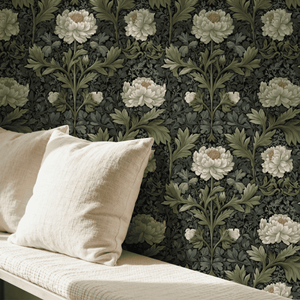
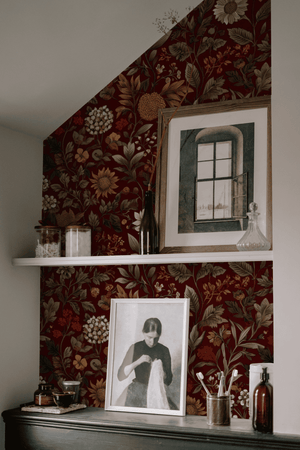
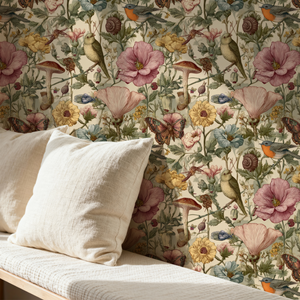
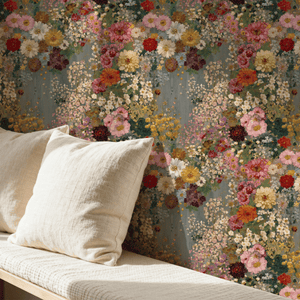
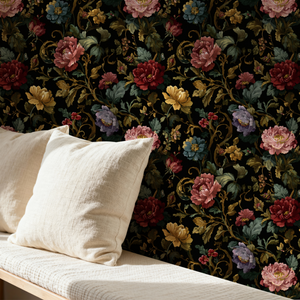
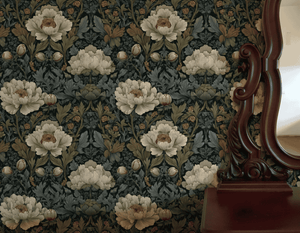
A Liberty print scarf is an obvious fit, and so is a tie. Bags take it too, as do fine craft and haberdashery. At home it covers cushions and lampshades, and ends up as trim. Liberty even puts its florals on its own wallpaper.
What flower represents Liberty?
There is no single official bloom, but a few are closely tied to the name. Go back to early Art Nouveau prints such as Ianthe, or to Hera, a forerunner of Art Nouveau, and you find lotus shapes and peacock-feather forms. Both are among the most iconic. Day to day, the dense mixed meadow florals are the signature look. If you had to pick one emblem (Liberty hasn't, officially), it would be the peacock feather, a long-standing house motif, beside the endless small flowers that made its reputation.
What does Liberty style mean?
It means artistic, richly colored, and rooted in the Aesthetic and Art Nouveau movements the store helped lead, so much that "Stile Liberty" became the Italian name for Art Nouveau itself. Used now, the phrase points to dense, detailed florals whose many colors get along, with an eclectic streak of English heritage crossed with Eastern influence (the shop began by selling goods from Japan) and quiet luxury underneath.
Calling something a Liberty print places it in that tradition of considered, heritage English design.
Liberty floral questions
What is a Liberty floral?
It is a small-scale floral print from Liberty of London, typically dense, colorful, often miniature flowers drawn from the company's huge botanical archive and printed on its fine Tana Lawn cotton. Wiltshire, the small berry-and-leaf design, is a good one to look up.
What is so special about Liberty fabric?
Exceptional fine cotton, rich multi-color printing of six or more shades, an archive of more than 50,000 designs spanning more than 150 years, and a heritage running from 1875 through Art Nouveau and the Arts and Crafts movement. If we had to pick one, it's the color.
What is Tana Lawn?
Liberty's signature fine cotton, introduced in 1928 and named after Lake Tana in Ethiopia. It's lighter than shirting yet tight and durable, and most Liberty prints go onto it.
Why is Liberty fabric expensive?
Premium long-staple cotton, complex multi-screen printing in many colors, original often hand-painted artwork from a vast archive, and a heritage brand with English quality control. Six or more colors means six or more separate screens or rollers.
What flower represents Liberty?
No single official one, but the lotus and peacock-feather forms of early Art Nouveau prints like Ianthe, and of Hera, a forerunner of Art Nouveau, are iconic, and dense mixed meadow florals are the signature look. Still, the peacock feather comes closest to an emblem.
What does Liberty style mean?
Artistic, richly colored design rooted in the Aesthetic and Art Nouveau movements, so much that "Stile Liberty" became the Italian name for Art Nouveau. That's how closely the Regent Street shop was tied to the style.
Are Liberty fabrics worth it?
For many makers, yes. On a quilt or a dress you plan to keep, the cloth and color justify the price. For everyday sewing it's a premium you can skip.
What is the history of Liberty fabric?
Arthur Lasenby Liberty opened on Regent Street in 1875, became a center of the Aesthetic and Art Nouveau movements, and commissioned Arts and Crafts designers such as the Silver Studio, C. F. A. Voysey and Archibald Knox. Tana Lawn followed in 1928, and the small florals printed on it grew into the company's signature.


